Orbio raises $21 million to automate hiring and onboarding for frontline workers
You're about to witness a significant shift in how you manage your frontline workers. Orbio, a New York City-based startup, has just secured $21 milli...
Editorial Note
"Reviewed and analysis by AF1 Editorial Team."
In this article
You're about to witness a significant shift in how you manage your frontline workers. Orbio, a New York City-based startup, has just secured $21 million in a Series A round, led by Dawn Capital. This investment will be used to further develop Orbio's AI-powered workforce management platform, which aims to automate tasks such as hiring, onboarding, and monitoring staff performance.
What Orbio's AI Agents Can Do
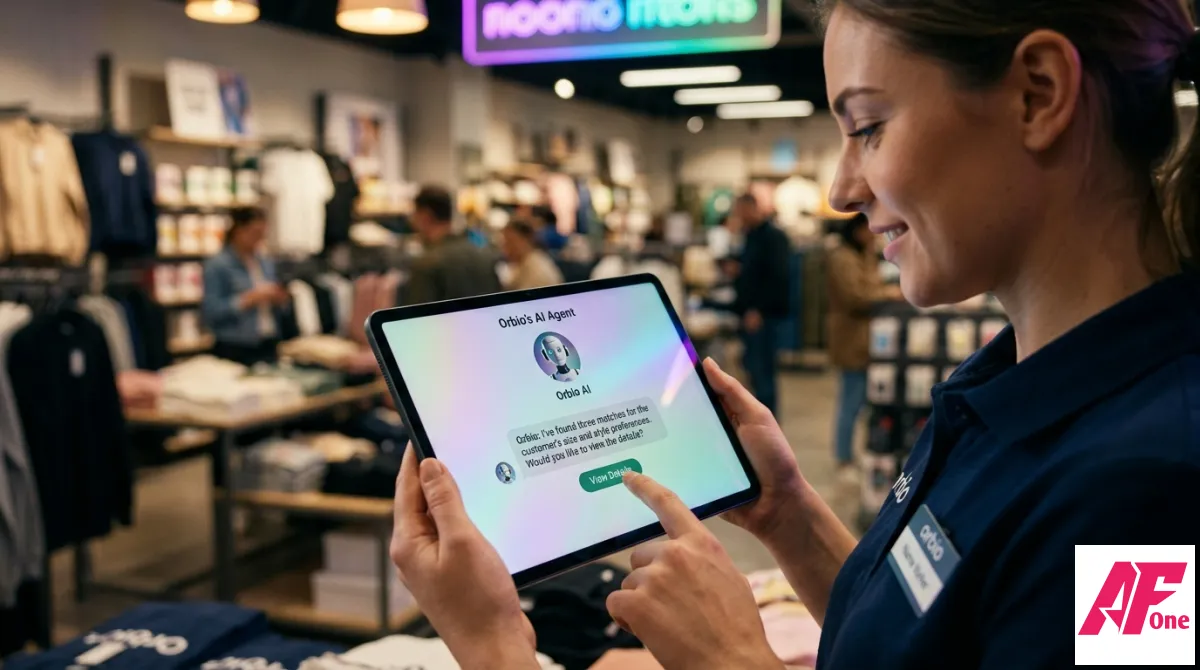
Orbio's AI agents, named Maria, Daniel, and Claire, can autonomously interview candidates, assess their fit, monitor output, and conduct daily check-ins throughout an employee's entire work lifecycle. This means significant operational cost reductions and efficiency gains for your business, directly affecting your bottom line. You can expect to see improvements in areas such as:
- Reduced hiring time and costs
- Improved employee retention and performance
- Enhanced operational efficiency and productivity
- Better data-driven decision making
Why This Matters to You
For your business, this funding means a future where your frontline operations can be leaner, faster, and more predictable. You can think of your current hiring and HR process as a leaky bucket. Every time you hire, onboard, or lose a frontline employee, that's a dollar amount that drips out. Orbio's AI agents act as a sophisticated leak-stopper, reducing the expenses associated with high turnover, extensive manual interviews, and inconsistent performance monitoring.
Consider the market implications: companies like YUM! Brands (Pizza Hut, Taco Bell, KFC) and The Stepping Stones Group, which rely heavily on large, distributed frontline workforces, are precisely who Orbio aims to serve. If you're operating in hospitality, retail, healthcare support, or logistics, this technology can redefine your unit economics. Your labor costs, often the largest operational expense, become more manageable and predictable.
What You Should Do
If you're an investor, evaluate Orbio not just on its technology, but on its ability to capture a massive, historically underserved market. Its competitive advantage lies in its comprehensive AI agent approach, which aims for end-to-end lifecycle management, unlike point solutions. Look at its traction with early adopters and the scalability of its AI models.
For startup founders, consider how Orbio's success signals a strong market demand for solutions that directly address operational inefficiencies in traditional industries. If your startup is in HR tech, this should prompt you to accelerate your AI integration roadmap. If you're building a business that relies on a large frontline workforce, start exploring how you can pilot or integrate AI-driven automation to reduce your labor costs and improve employee retention.
The Bottom Line for Business Leaders
Your strategic response to Orbio's emergence should be proactive and data-driven. First, conduct an internal audit of your current frontline worker hiring, onboarding, and retention costs. Quantify the 'leaky bucket' problem in your organization. Second, explore AI-driven solutions like Orbio. Understand their capabilities and how they can be tailored to your specific operational needs and industry. Third, develop a phased plan for integrating AI into your HR and operations strategy, prioritizing areas where you see the biggest cost savings and efficiency gains.
Originally reported by
TecnologyWhat did you think?



Stay Updated
Get the latest tech news delivered to your reader.