Here's How Robots Are Learning to Make Your Life Easier
Discover how Yen-Ling Kuo's Diff-DAgger method is teaching robots at the University of Virginia to make educated guesses, making automation more reliable for you in unfamiliar situations. Your future with smarter robots starts now.
Editorial Note
Reviewed and analysis by AF1 Editorial Team.
In this article
You've seen robots perform amazing feats in controlled settings, but what happens when things get unpredictable? Imagine a robot helper that truly adapts, not just follows static commands. At the University of Virginia, Assistant Professor of Computer Science Yen-Ling Kuo is leading a breakthrough, teaching robots to make educated guesses. This tackles the fundamental challenge of robot performance in unfamiliar situations, empowering your future automated helpers to think on their feet.
Key Details
At the forefront of this innovation is Dr. Yen-Ling Kuo, an Assistant Professor of Computer Science at the University of Virginia in Charlottesville, Virginia. Driven by an early ambition to understand "how things worked," her career focuses on leveraging computing to solve real-world problems. She states, "Once I discovered how powerful computers could be, I knew I wanted to focus on using them to solve real-world problems." Her research directly addresses a key challenge: training robots to perform tasks reliably in unfamiliar situations, moving beyond rigid, predefined instructions. This groundbreaking work has been recognized by the IEEE Robotics and Automation Society.
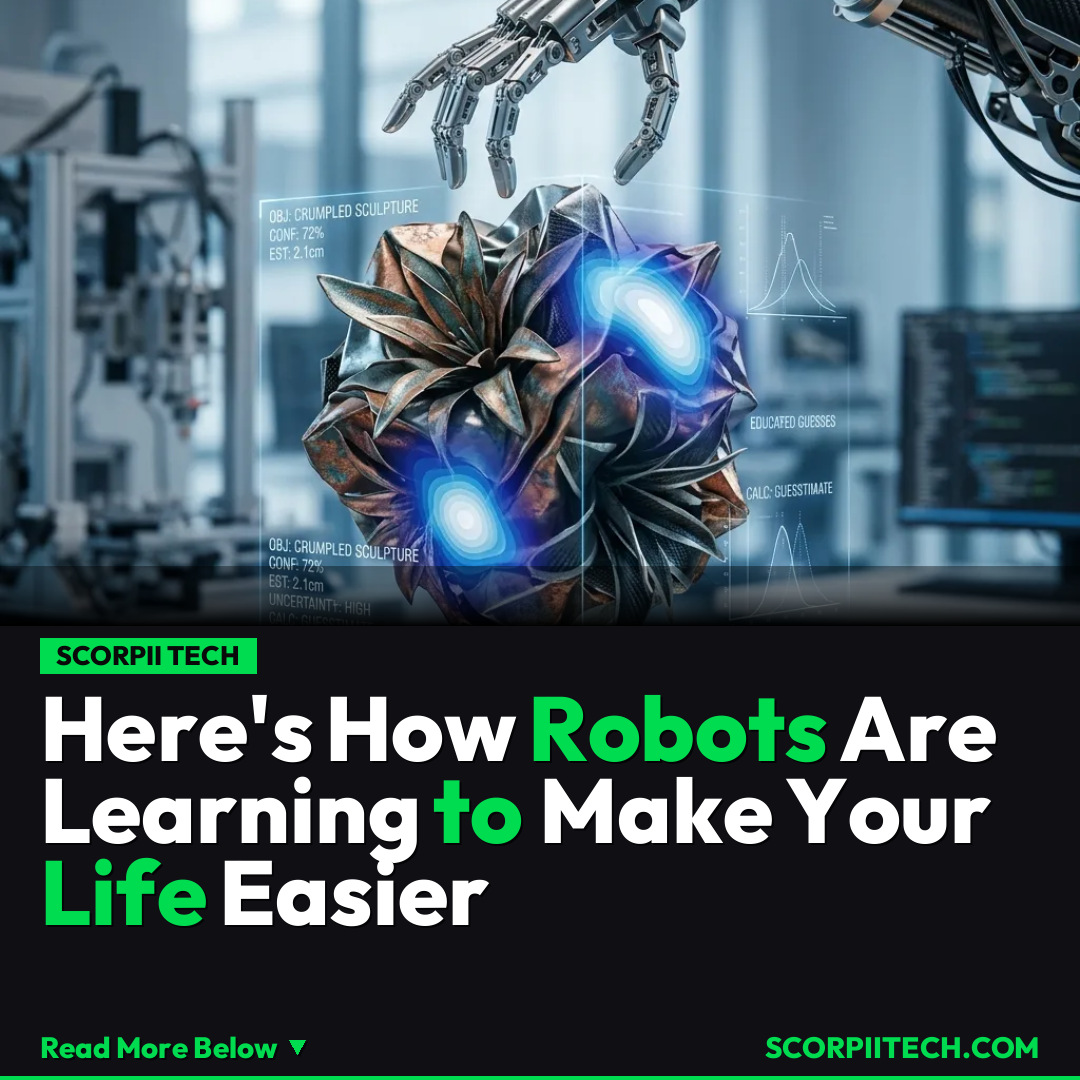
Dr. Kuo’s pioneering solution is the Diff-DAgger method, a significant leap in uncertainty estimation for robotic manipulation. This technique enhances the existing dataset aggregation (DAgger) method by integrating a "robot-gated DAgger" and a robust diffusion policy, allowing robots to make "educated guesses" and adapt actions even in unforeseen conditions. Think of a robot arm successfully grasping an object it’s never encountered, using statistical tests to infer the best approach. Documented in "Diff-DAgger: Uncertainty Estimation with Diffusion Policy for Robotic Manipulation," her background includes affiliations with National Taiwan University, MIT (Media Lab, CBMM, CSAIL, led by Boris Katz), and Google, with support from the National Science Foundation and Toyota Research Institute.
Why This Matters
Why does Diff-DAgger matter to you? It fundamentally impacts robotics' reliability and versatility, accelerating our journey toward automation that isn't limited to pristine, controlled environments. Envision smart factories where robots seamlessly adjust to production changes, or home assistants adapting to your unique space without constant reprogramming. This research tackles the core hurdle preventing widespread advanced robotic adoption: their fragility with the unexpected. It transforms robots from rigid tools into flexible, intelligent problem-solvers that can genuinely enhance your daily life and work.
The Bottom Line
The bottom line is clear: the era of robots merely following precise instructions is rapidly evolving. Thanks to Dr. Yen-Ling Kuo and the Diff-DAgger method, your future automated companions and industrial robots will truly "think" on their feet, making educated guesses to navigate unfamiliar situations. This means more reliable, adaptable, and valuable robotic systems are on the horizon for you, making automation a more seamless part of your future.
Originally reported by
IEEE SPECTRUMWhat did you think?



Stay Updated
Get the latest tech news delivered to your reader.