Why Your Next Humanoid Robot Might Not Look Human
Your idea of humanoid robots is about to change. Former Google CEO Eric Schmidt's Genesis AI is deploying non-humanoid robots by late 2026. See how this impacts your world.
Editorial Note
"Reviewed and analysis by AF1 Editorial Team."
In this article
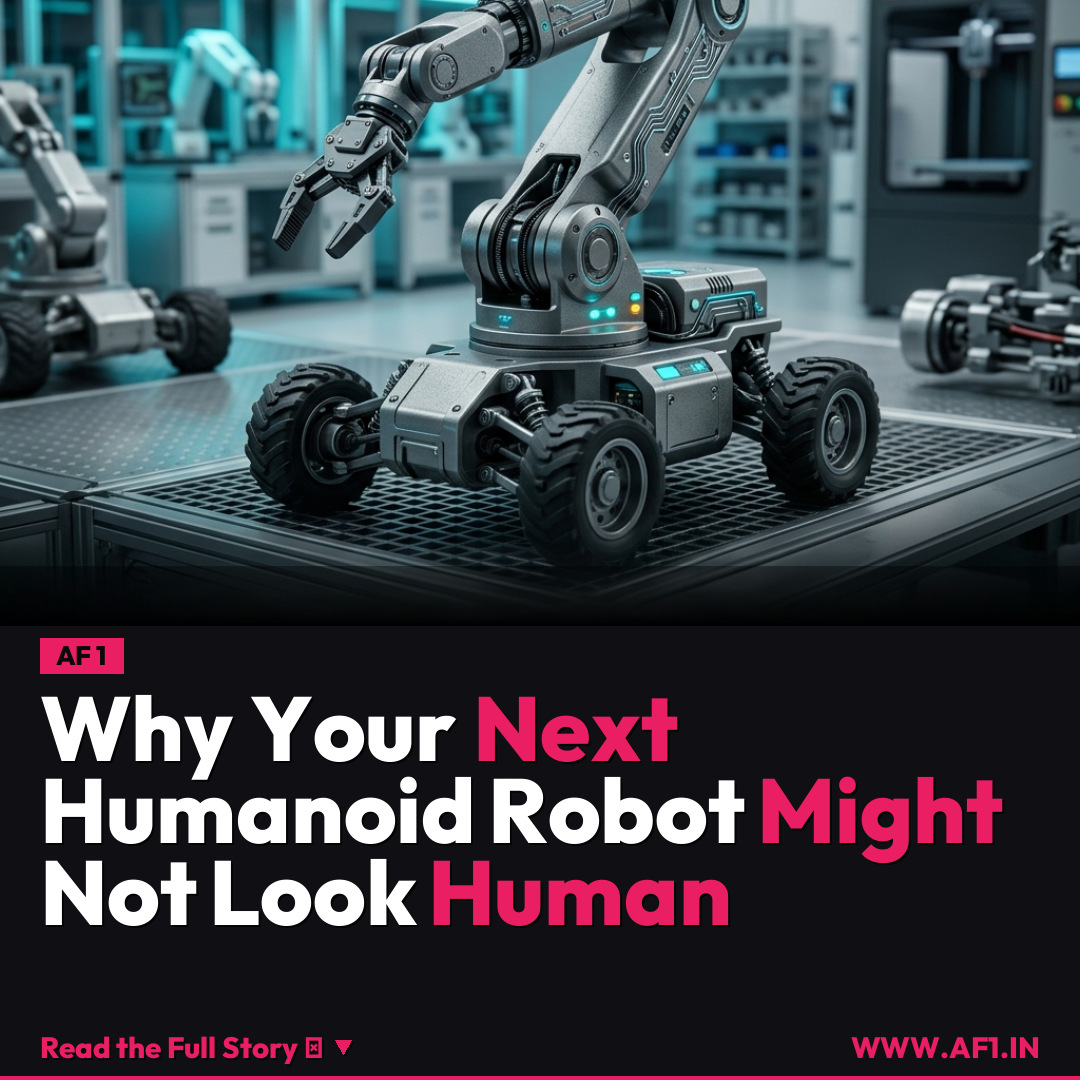
Picture a humanoid robot. Did you imagine a sleek, bipedal figure, maybe with a friendly face? Well, you might need to recalibrate your imagination. The next generation of 'humanoid' robots might ditch the head, shed the legs, and even fold down like a deck chair on a wheeled base. This isn't science fiction; it’s the radical vision unfolding for your future interactions with AI.
Key Details
This paradigm shift comes straight from a heavyweight in the tech world. Eric Schmidt, the former CEO of Google, is at the forefront of this evolution, championing the idea that "humanoid robots don’t need to look human." You might think this sounds counterintuitive, but consider the practical implications. If a robot's purpose is purely functional, why burden it with human aesthetics?
Schmidt's vision is being realized through Genesis AI, based in France, with their innovative robot named Eno. Imagine a robot designed purely for function: perhaps a compact, wheeled platform that can navigate tight spaces, extend an arm for specific tasks, and then retract or even fold away when not in use. This approach sidesteps the complex and often expensive challenge of replicating human form and movement, focusing instead on efficiency and utility for you.
You won't have to wait long to see these revolutionary designs in action. Genesis AI plans to begin production and targeted customer deployments by the end of 2026. Initially, these non-humanoid robots will transform operations in manufacturing, laboratories, and logistics. But that’s just the start. Following these industrial applications, you can expect to see them rolling into hospitals and hotels, eventually making their way into consumer environments too. Your interaction with robotics is about to get a lot more diverse.
Why This Matters
So, why should you care that your next "humanoid" robot might not have a face or legs? This fundamental re-evaluation of humanoid robot design has massive implications. By stripping away the need for human-like aesthetics, Genesis AI isn't just making robots look different; they’re likely making them more affordable, more robust, and more adaptable for a wider range of tasks. You might see a reduction in production costs and development time, which means these advanced tools can get into your hands, or at least your workplace, much faster.
For you, this means a more rapid integration of automation into various aspects of daily life and work. In manufacturing, these simpler designs could streamline assembly lines and material handling, while in logistics, they could optimize warehouse operations. Think about hospitals, where robots that prioritize functionality over form could assist with fetching supplies or even basic patient support without the uncanny valley effect. This shift ensures that robots serve practical needs first, improving efficiency and potentially freeing up human workers for more complex, creative, or empathetic tasks.
The Bottom Line
The bottom line for you is this: prepare to redefine your understanding of 'humanoid' technology. Eric Schmidt and Genesis AI are pushing us beyond anthropomorphic designs into a future where robots are tailored precisely for their jobs, not for looking like us. Keep an eye out for these innovative, perhaps even quirky, machines appearing in your factories, labs, and even homes by the end of 2026. Your world is becoming more automated, and it’s doing so in ways you might never have anticipated.
Originally reported by
The vergeWhat did you think?



Stay Updated
Get the latest tech news delivered to your reader.